
Market Analysis & Updates
Dubai Property Consolidation 2026: A Buyer Playbook for the AED1M–2M Market
Florian
•September 21, 2026
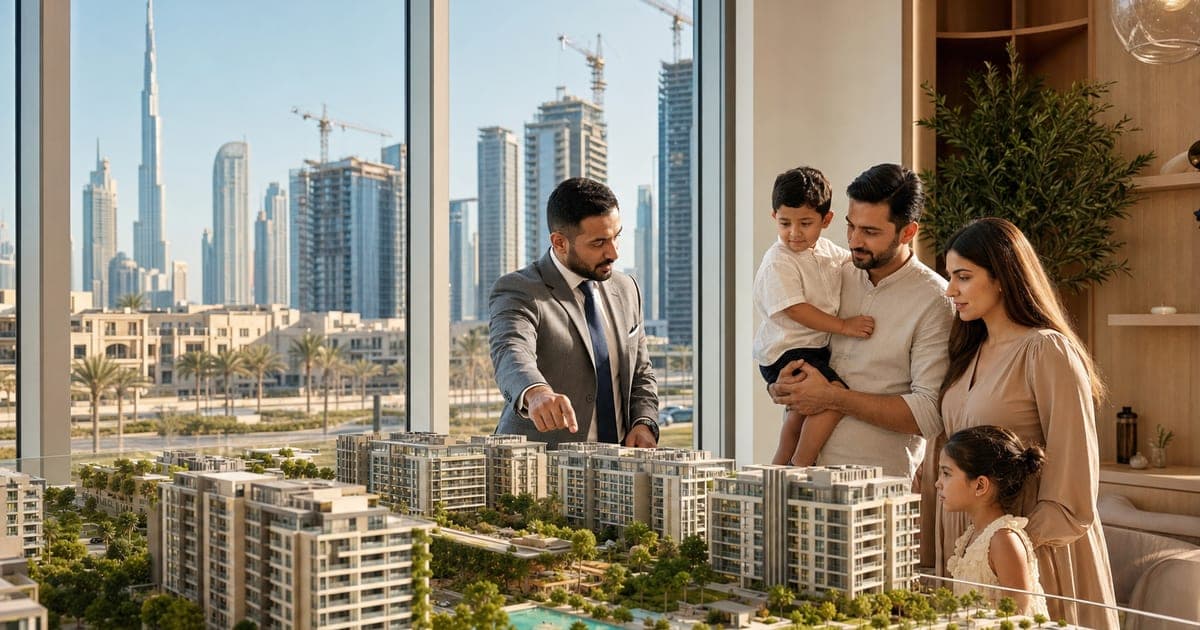
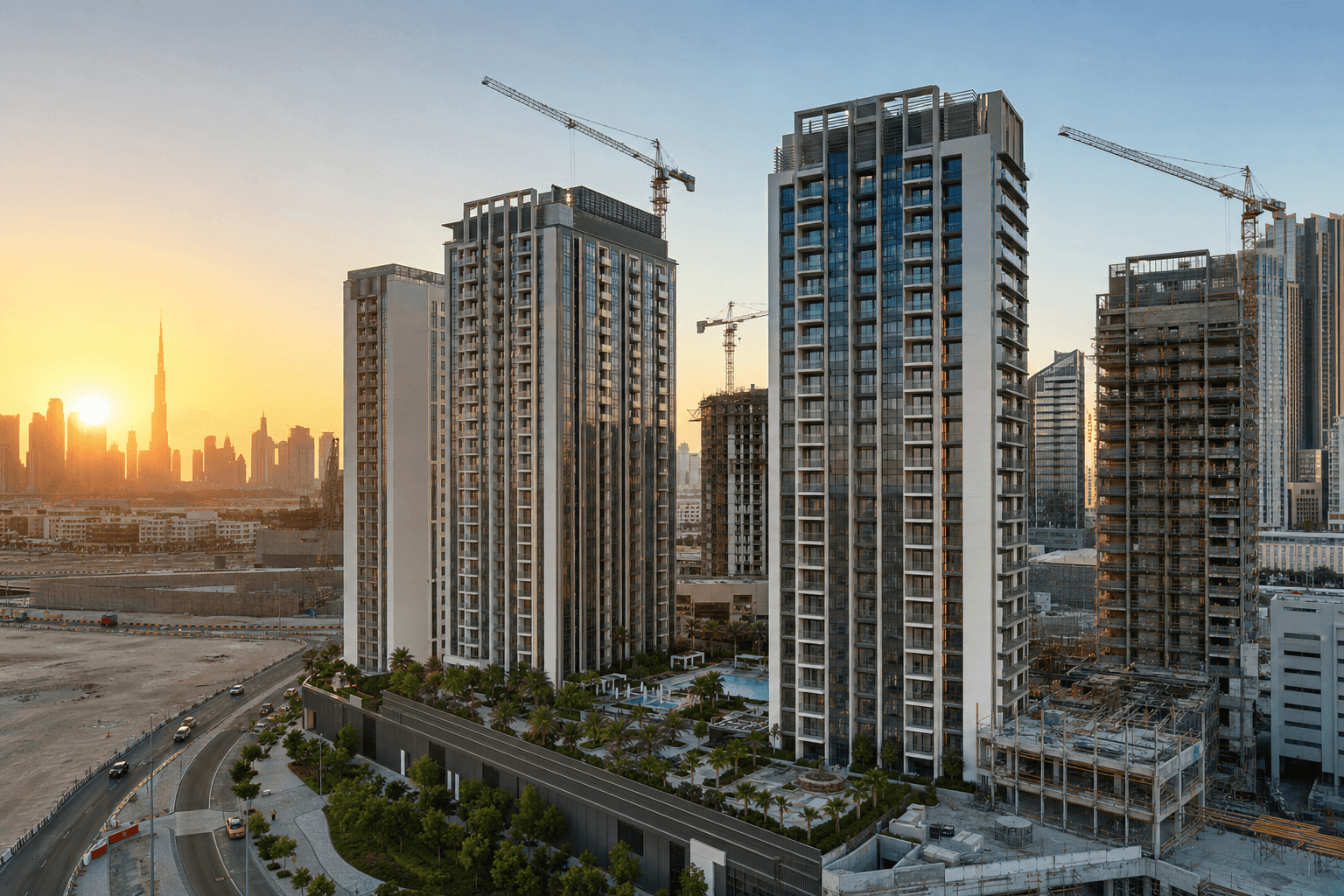
Dubai real estate is not simply hot or cold in September 2026. The better description is more selective. Over the last two weeks, two signals have stood out: developers are talking openly about consolidation, and buyer demand is rotating toward more attainable homes, especially in the AED1 million to AED2 million bracket.
That matters for anyone buying property in Dubai, investing in off-plan apartments, or moving from renting to ownership. In a fast-rising market, buyers often chase availability. In a consolidation phase, the smarter move is to compare delivery risk, payment-plan cost, community supply, resale liquidity and actual end-user demand.
This guide focuses on the current buyer opportunity: how to approach Dubai property consolidation without mistaking flexible payment plans for automatic value.
What changed in Dubai property in September 2026?
On 17 September 2026, Gulf News reported that Dubai’s property market is entering a new phase of consolidation, with more emphasis on financial discipline, construction capacity and the ability of developers to adapt to changing buyer behaviour. The report also noted that regional disruption has added pressure to construction materials and logistics, while stronger developers continue to launch and sell.
Separately, during the International Property Show 2026 at Dubai World Trade Centre, developers told The National that buyer demand is shifting toward more accessible price points. The report said appetite for ultra-luxury homes above AED10 million to AED15 million has softened, while demand is stronger in the AED1 million to AED2 million range.
This is not a collapse story. It is a quality-control story. Buyers still want Dubai, but many are asking harder questions before they reserve. Investors want yield that survives service charges and vacancies. End users want a home that is liveable, financeable and not surrounded by identical handovers in the same month.
Why the AED1M–2M bracket is now high-intent
The AED1 million to AED2 million range is where several buyer groups now overlap. It can fit first-time Dubai buyers, salaried professionals with mortgage capacity, investors looking for rentable apartments, and overseas buyers who want a manageable entry point rather than a luxury trophy asset.
That bracket is also where developers can use flexible payment plans most effectively. Smaller down payments, post-handover structures and monthly instalment plans can make ownership feel closer for tenants who are already paying high rent in communities such as JVC, Dubai Hills Estate, Business Bay, Dubai Marina, Al Furjan, Arjan, Dubai South and JLT.
But the headline price is only the start. A AED1.4 million apartment can be a strong buy in one building and weak in another if service charges are high, handover is far away, layouts are inefficient or too many similar units are completing nearby. In today’s Dubai property market, the winning question is not just Can I afford it? It is Will the next buyer or tenant also want it?
Flexible payment plans: useful tool, not free money
Flexible payment plans are becoming a major closing tool in Dubai real estate. The National reported examples from developers using lower upfront commitments and long payment structures to attract more price-conscious buyers. Gulf News also reported that developers have softened down payments and payment plans, helping a wider pool of end users enter the market.
That can be positive, especially for buyers who have stable income but prefer not to lock away too much cash on day one. However, a payment plan can hide the real cost of the purchase if you do not compare it with ready property, mortgage options and resale values.
Before choosing an off-plan property in Dubai because of the payment plan, check:
- Total price per square foot: compare the launch price with recent registered sales in the same community, not only with the developer brochure.
- Payment timing: understand how much is due before handover, at handover and after handover.
- Exit flexibility: ask when you are allowed to resell and what percentage must be paid before transfer.
- Mortgage compatibility: confirm whether UAE banks are likely to finance the property and at what stage.
- Service charges: a lower entry price can still produce a weaker net yield if annual charges are high.
- Handover risk: review the developer’s delivery record, escrow status and construction progress.
For investors, the most important calculation is net return, not advertised ROI. Include DLD fees, agency fees, mortgage costs, service charges, furnishing, maintenance, vacancy assumptions and realistic rent. For end users, include school runs, commute time, parking, building density and future construction disruption.
Supply is rising, so community selection matters more
The Dubai Land Department said at IPS 2026 that 104 real estate projects were completed in the first half of 2026, adding 24,537 new units to the market. DLD also said the number of new units was up by more than 36% compared with the same period in 2025.
More supply is not automatically bad. Dubai’s population, business activity and relocation demand continue to support housing needs. But new units do not land evenly. A waterfront project with limited comparable stock is different from a corridor where several towers with similar layouts, amenities and handover dates compete for the same tenants.
White & Co’s August 2026 market report showed strong activity across sales and rentals, including 40,154 property transactions worth AED27.93 billion. It also reported that new residential rental contracts represented more than 71% of the transactions covered in the report. That supports an important point: people are still moving around Dubai, but they are comparing budgets, locations and property quality more carefully.
For AED1 million to AED2 million buyers, community-level research is now essential. In JVC, compare building quality and handover clusters street by street. In Dubai South, understand the Al Maktoum International Airport growth story but do not ignore current commute realities. In Al Jaddaf, compare creek access, metro convenience and building positioning. In Business Bay, check whether the premium is justified by view, tower quality and rental depth.
Ready or off-plan: how to choose in a selective market
Ready property and off-plan property serve different needs. Ready homes in Dubai give certainty: you can inspect the apartment, confirm the view, see the lobby, understand service charges and rent it immediately. Off-plan property can offer staged payments, newer amenities and earlier entry into a developing location, but you are buying future delivery.
In a consolidation phase, ready property becomes especially useful as a benchmark. Even if you prefer off-plan, compare it with completed buildings nearby. If the off-plan unit is more expensive per square foot, ask what justifies the premium. Is it a stronger developer, better floor plan, branded operation, waterfront frontage, metro proximity or a materially better amenity package? If the answer is only the payment plan, be careful.
For investors, ready stock may provide clearer yield today. For end users, off-plan may still work if you can wait and the payment structure matches your cash flow. For relocating families, ready homes near schools, metro stations and established retail may reduce lifestyle risk, even if the initial price looks less exciting than a launch offer.
Practical buyer strategy for late 2026
If you are buying Dubai property in the current consolidation phase, slow the process down. Good projects will still sell, but buyers now have more room to compare. Use that to your advantage.
Start with purpose. Are you buying to live, rent long-term, hold for capital growth, or qualify for a residency pathway? Then build a shortlist by community and property type, not by payment plan alone. A one-bedroom in JVC, a two-bedroom in Al Furjan and a compact apartment in Business Bay may all sit near the same budget, but their tenant pools, service charges and resale profiles can be very different.
Ask your broker for recent registered transactions, expected service charges, comparable rents, handover timelines and nearby supply. If the property is off-plan, verify the developer’s project history and understand the escrow and transfer conditions. If it is ready, inspect at different times of day and check building maintenance, parking, noise and lift capacity.
Most importantly, keep a cash buffer. Flexible payment plans can make the first step easier, but ownership in Dubai still comes with transfer fees, agency fees, furnishing, fit-out, mortgage costs and ongoing community charges.
Conclusion: Dubai is rewarding selective buyers
Dubai’s September 2026 property conversation is shifting from speed to discipline. The market is still active, but buyers are more price-conscious, developers are competing harder, and the AED1 million to AED2 million segment is becoming a serious battleground for end users and investors.
That creates opportunity, but only for buyers who do the work. Compare ready and off-plan, test the payment plan, study the community pipeline and focus on properties with real tenant or end-user demand. BrokeryHero can help buyers and investors read the market clearly, ask the right questions and avoid being guided by launch hype alone.
Sources
- How Dubai’s property market enters a new phase of consolidation
- 'High-value' Dubai property in demand in shift from luxury market
- Dubai Land Department advances investor confidence, innovation and Emirati empowerment at IPS 2026
- Dubai Real Estate Market Report August 2026
- Bayut's Dubai Sales Market Report H1 2026
Stay in the loop
Get the latest articles delivered every week.
By subscribing, you agree to receive blog updates. Unsubscribe anytime.
More from this category
Sep 18, 2026
Sep 16, 2026
Sep 14, 2026
Sep 11, 2026

Sep 9, 2026
Sep 7, 2026
Sep 4, 2026
Sep 2, 2026
Aug 31, 2026
Aug 28, 2026